What the Panama Canal Project Teaches Us About Flow and New Tech
How might the history of the construction of the Panama Canal help organizations effectively deploy productive new technologies? The project provides important lessons for today's leaders about the importance of flow, people, and courage.
1881 - 1889: The Failed French Endeavor
Sailing around Cape Horn to transit between the Atlantic and Pacific oceans has always been treacherous, time-consuming, and costly. The construction of the Suez Canal, led by the French in 1869, demonstrated how steam-powered machines could change international commerce. The French believed they could do the same in Central America to shortcut Cape Horn and got started in 1881.
The plan was to cut a sea-level path through the isthmus, similar to the Suez Canal, but the tropical landscape and the weather was very different from the deserts of Egypt: rain, rivers, mudslides, and dense jungle. The environment took a terrible toll on workers, with malaria and yellow fever claiming an estimated 22,000 lives. Due to all of the engineering challenges, corruption, and human tragedy, the project failed in 1889 after spending $287 million.
1904 - 1914: The American Struggle and Breakthrough
The United States took on the project in 1904 after some aggressive geopolitical moves, primarily to improve the US Navy's ability to project power in both oceans. The Americans bought the leftover French assets and picked up where they left off, with orders from President Theodore Roosevelt to "make the dirt fly". However, the isthmus posed the same challenges to the Americans. Workers were sick, housing and food were scarce, and equipment was in poor condition. By mid-1905 the US had spent over $100 million but had little to show for it and morale was low.
John Frank Stevens, a self-taught railroad expert, took over as Chief Engineer of the project in 1905. He advocated to change the construction plan to use a lock-and-lake approach instead of the original flat sea level approach pursued by the French. This would require the excavation of millions of cubic yards of earth more than the French had managed, and many more engineering problems to solve, in the same difficult environment.
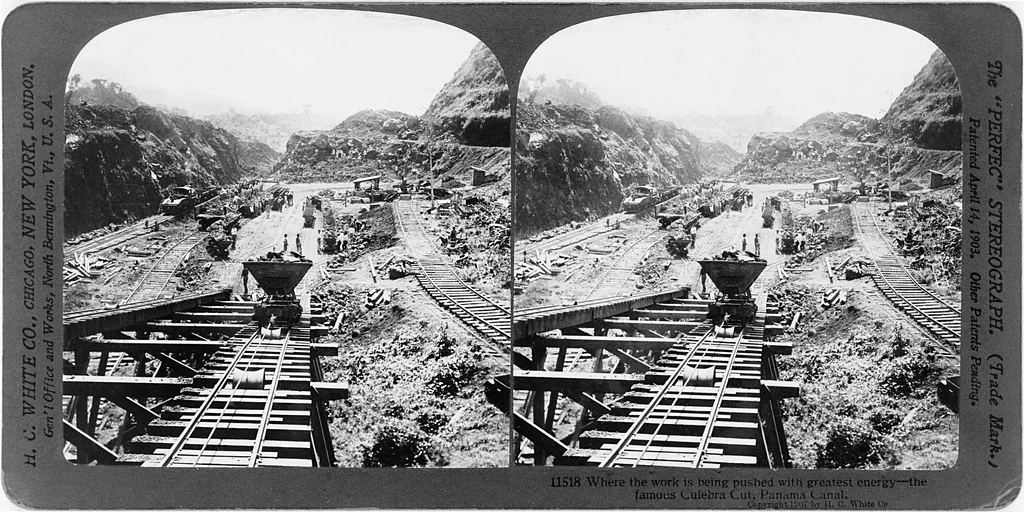
Cutting-edge construction technology was quickly deployed to take on the task. However, Stevens recognized that digging faster alone would not make this project succeed. The real challenge was moving the excavated earth to where it needed to go as efficiently as possible. Instead of making the dirt fly, Stevens made logistics the top priority. He did this by making these changes (among other things):
- Improving the compensation and living conditions of workers. This included innovations to eradicate mosquito-borne disease, which was a major public health achievement led by Chief Sanitization Officer William Gorgas.
- Overhauling the rail network with double-tracked rails to support heavier equipment more reliably.
- Optimizing how spoils were transported to minimize idle times through an elaborate network of shovels, trains, unloaders, and track-shifters.
Stevens also stopped excavation for long periods of time to address these issues while under great pressure to just keep digging before the money and the political will ran out.
The project was completed in 1914 under the leadership of George Washington Goethals, who took over in 1907 and scaled up the systems Stevens established. No single bottleneck would stop the entire operation, such as when steam shovel operators went on strike.
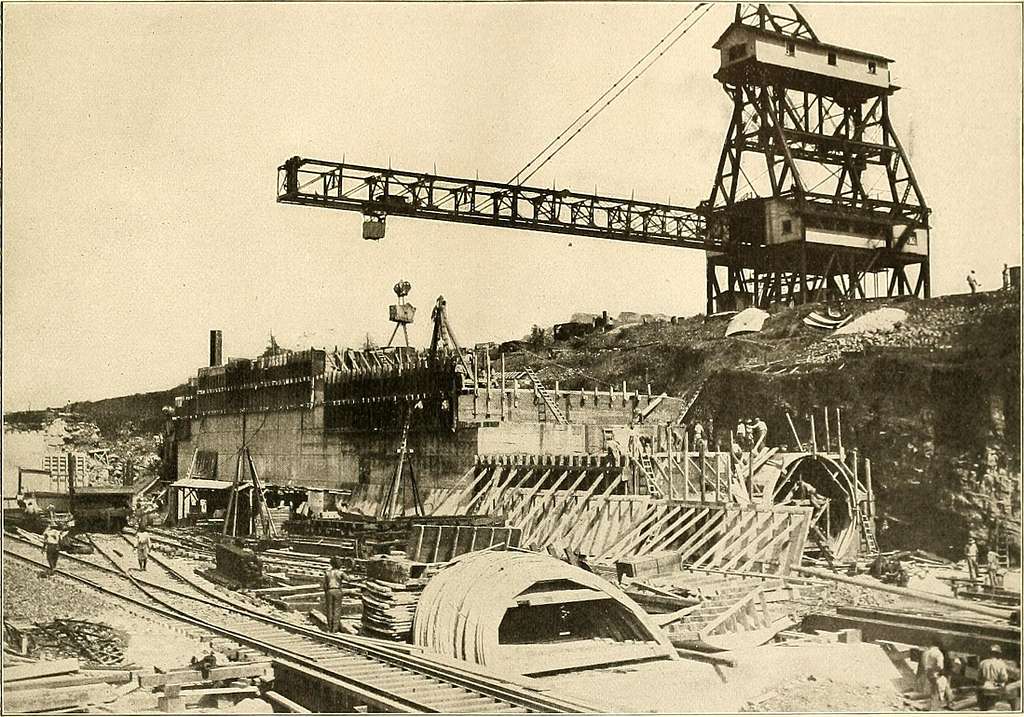
Once completed, the Panama Canal resulted in the largest man-made lake and largest dam in the world. Its opening was overshadowed by the breakout of World War I, but the project achieved its strategic goals, demonstrated American industrial might, and forever changed the maritime world.
What this Means for Today's Companies
The American Panama Canal project was not a sure thing. Success was attributable to many things, especially new technology and sanitization, but what stood out to me the most as I read David McCullough's 1977 book The Path between the Seas: The Creation of the Panama Canal, 1870-1914 was Stevens' focus on the efficient flow of materials and the leadership it required. History is full of similar examples, including the Berlin Airlift and the Penny Post in Britain.
Here are some practical take-aways for today's leaders under pressure to achieve big goals in the midst of promising technological change:
1. Sudden Increases in Throughput Have Potential Downsides
It's easy to get excited about the potential for new technology to speed up formerly slow and/or costly processes, but a sudden increase in throughput can have many unintended consequences.
- In the Panama Canal project, the Americans' modern equipment could excavate more material, but without sophisticated logistics to support them, those machines would have quickly gone idle as they ran out of space.
- In the late 1970s and early 1980s, companies invested heavily in new information technology but productivity did not increase as expected. The economist Robert Solow noticed that computers were great at generating much more of the same kind of outputs as office workers, causing the people who needed to read and act on those outputs to become the bottleneck.
- In 2026, AI coding tools are the most profitable application of LLMs so far, but organizations are struggling to change their existing processes and roles to integrate this new way of creating software.
The pressure to adopt new technologies can be intense, but the value created by increased throughput can quickly evaporate if the supporting process can't handle it. Deploying the new technology is the easy part. The harder part is understanding how the integrated processes also need to change and doing the unglamorous and difficult work to change them.
Challenge assumptions about existing processes, ensure support to make systemic changes as needed, and carefully monitor bottlenecks at all points. For more information on this, check out The Goal by Eli Goldratt and The Principles of Product Development Flow by Donald G. Reinertsen. I may do a deeper dive on this subject in a future post.
2. People Come First
Technological change creates new opportunities and investment for ambitious projects. Such projects are impossible to plan perfectly. The people you enlist to execute these changes will need to quickly adapt to new information, communicate effectively, take care of each other, and often go the extra mile to get things done.
Stevens did the most he could to improve the health and comfort of the workers on the project, and it clearly paid off.
I've been part of many large technology-driven transformation projects in my career, as both a leader and contributor. The projects that "threw bodies at it", typically with many low-wage contractors, tend to be the biggest wastes of time, money, and human potential. Adding labor late to a project is also not a good idea but organizations often do it for optics rather than outcomes.
The pace of disruptive technological change is increasing. Today's leaders must understand that new tech comes with hype and learning curves that need to be navigated by trustworthy people. They are your eyes and ears. Provide the right incentives, slack time, autonomy, and purpose so they can implement big changes.
The lesson from the Panama Canal is that treating the people doing the work very well amplifies value creation and mitigates risks in large change initiatives.
3. Have the Courage to Stop
After a year of little progress, Stevens had to shut down excavation to shore up the supporting infrastructure at great expense. In today's business world, the pressure to show continuous progress is overwhelming, but this is nothing new:
- The Chernobyl and Space Shuttle Challenger disasters were caused, in part, by a culture of not reporting bad news
- The Big Dig in Boston had many positive progress reports amid countless delays and skyrocketing budgets
- The Enron and Theranos business failures are great examples of warning signals being silenced by management
The famed Toyota Production System had one key element that directly addresses this issue: the andon. This is a system by which any person on the assembly line has the authority to stop production (originally by pulling a cord) if a quality or process issue was identified. Toyota realized that it's more dangerous to let such issues flow downstream and potentially compound than it was to briefly stop progress.
Lean manufacturing is not applicable to every project or process, but empowering people to stop and address issues early is the key takeaway. Such action often requires courage, especially when the root causes or fixes are not yet known.
Use the New Tools Wisely
It may seem crazy to compare something like the Panama Canal project, a dangerous and dirty megaproject at the turn of the 20th century, to relatively small and comfortable projects in today's air-conditioned corporate world, but these lessons seem to be frequently re-learned throughout history.
Think about John Frank Stevens the next time you have the opportunity to lead a large effort involving new productivity-boosting technology. Ensure value is flowing properly, take care of your people, and pause when necessary.